
Searching St. Clair County Criminal Dockets
Missouri Case.net is the public starting point for a St. Clair County criminal docket. Its public guide documents four search routes: Litigant Name Search, Filing Date Search, Case Number Search, and Scheduled Hearings & Trials Search. A case number is the cleanest route when you have one. Name searches work better with limits. Narrow the party to St. Clair County and a filing period. Treat the results as a way to locate the record, nothing more. Open the case-number link. Read Case Header for basics. Then read Docket Entries for the dated event list. Write down the category, filing date, division, and case number before acting on any setting, charge, warrant line, or disposition. Remote information can come up short. The St. Clair County Circuit Clerk can confirm the local record, offer a courthouse public terminal, and explain how to request a copy.
- Open Case.net and select the narrowest available search method.
- Use a known case number first, or use the litigant name with a St. Clair County and date limit.
- Confirm the county, party, and CR category before opening the result.
- Read Case Header, then Docket Entries, in date order.
- Use Scheduled Hearings & Trials Search for a date question and compare it with the docket.
- Contact the clerk for a current deadline, public-terminal question, or certified record.
Note: A calendar result can change through a reset or continuance. So it is not proof that a hearing actually took place.
St. Clair Criminal Docket Codes
Missouri Court Operating Rule 4 builds each case number from a two-digit year, a location code, a case category, a sequence, and sometimes a subcase. The criminal category is CR. Year and category together separate a St. Clair County criminal docket from a traffic, infraction, municipal, civil, probate, or juvenile matter. Keep the punctuation intact. Keep the category letters too. A near match in another category can pull up a different case entirely when you type a number. The Missouri municipal docket and backer-sheet instructions show why the record runs deeper than a caption and a result. Clerk materials track case activity and related information over time.
That recordkeeping model invites you to read a St. Clair County criminal docket as a chronological court record. It is not a short statement about a person or an allegation.
Inside a St. Clair County Criminal Docket
A St. Clair County criminal docket can identify the case number, parties as publicly indexed, charge, attorneys, judge, filing date, court dates, notices, motions, hearings, plea activity, orders, disposition, sentence, and permitted document links. Bond details, warrants, complaints, informations, indictments, and compliance entries may also appear where public. Any single entry carries limited meaning. A plea line is not a sentence. A filed charge is not a final outcome.
| Case number | A Missouri number with a category such as CR, plus year and sequence components. |
|---|---|
| Case Header | Core case metadata, including parties, filing information, court, and category as publicly displayed. |
| Docket Entries | Chronological activity such as filings, settings, notices, orders, hearings, and dispositions. |
| Document link | A public attachment when a hyperlink is available; an unlinked entry does not prove that no document was filed. |
| Disposition | The recorded resolution of a charge or case, which is different from a certified judgment. |
The official municipal disposition-code reference spells out the shorthand a clerk uses. St. Clair County readers will see codes for a guilty plea, a court dismissal, a prosecution dismissal, not guilty, and trial de novo.
Those codes supply useful context. Still, do not assign them mechanically to every category without checking the entry and the current clerk record.
St. Clair Criminal Docket Sequence
Read the St. Clair County criminal docket in order and many mistakes disappear. A charge or complaint starts the court record. Later entries may show an arraignment. Motion practice, a pretrial setting, or a plea may follow. Trial activity, sentencing, or dismissal may come later. The sequence often gives better context than any one status label. It can also reveal that an old court date gave way to a later setting.
Criminal docket flow: Filing → Arraignment → Pretrial → Plea or Trial → Disposition → Sentencing.
For official use that requires authentication, ask Karen Hubbard, Clerk of Circuit Court, for a certified copy rather than treating a docket summary as the judgment. The county clerk office maintains Associate and Circuit Court records, along with municipal court records for Osceola, Lowry City, and Appleton City.
How a Criminal Case Moves
The Circuit Court of the 27th Judicial Circuit is St. Clair County's local trial-court structure. County court materials identify felony work as a circuit-level responsibility, while associate-circuit assignments depend on Missouri law, the category, and local administration. The docket is where that assignment becomes visible. A criminal record may therefore show a division and category that need confirmation before a reader draws conclusions about the level of offense or court action. Each later event has its own role. An arraignment addresses charges and rights. A pretrial entry marks a court event before trial. A continuance moves a scheduled event. A disposition tells how a charge or case ended, and a sentence or compliance line can follow it. For a live criminal matter, confirm any current setting with the clerk rather than inferring it from an older docket entry.
St. Clair Municipal Docket Boundaries
Municipal ordinance matters are not felony criminal cases. Missouri categories use MU for municipal ordinance cases and CR for criminal cases. The St. Clair County clerk structure includes municipal records for Osceola, Lowry City, and Appleton City, so a municipal case can surface through the county circuit-court record path. No city runs its own stand-alone calendar portal. The Missouri Rule 37 guidance addresses municipal-court protections, costs, confinement limits, and minor traffic matters.
The distinction matters. Read a municipal docket by its category, city context, and court event rather than labeling it a circuit-level criminal conviction.
Courts That Hold Criminal Dockets
Missouri runs one unified circuit-court system, and St. Clair County sits inside it. The local trial court is the Circuit Court of the 27th Judicial Circuit. Its divisions cover associate, criminal, municipal, juvenile, probate, civil, family, and related matters. So a docket search may show a division or an assignment. Don't expect a separate county court for every subject. M. Brandon Baker serves as Presiding Circuit Judge. M. Blane Baker is the Associate Circuit Judge, per county materials.
Circuit rulings move up through the state appellate structure. The intermediate stop is the Missouri Court of Appeals, Southern District. An appellate case is its own record. It cannot substitute for the St. Clair County Circuit Clerk's local case file.
Note: County and statewide materials disagree on the full membership of the 27th Judicial Circuit. Confirm neighboring-county jurisdiction before relying on it.
St. Clair Criminal Record Channels
A St. Clair County criminal docket is reachable several ways. Case.net is the statewide online starting point. Call the clerk at 417-646-2226 with local record questions. The St. Clair County Courthouse sits at 655 Second Street, Osceola, Missouri 64776. Its public terminal often helps. It works when a case shows up but a document cannot be viewed from home. Fax requests go to 417-646-2401, a method the office confirms works.
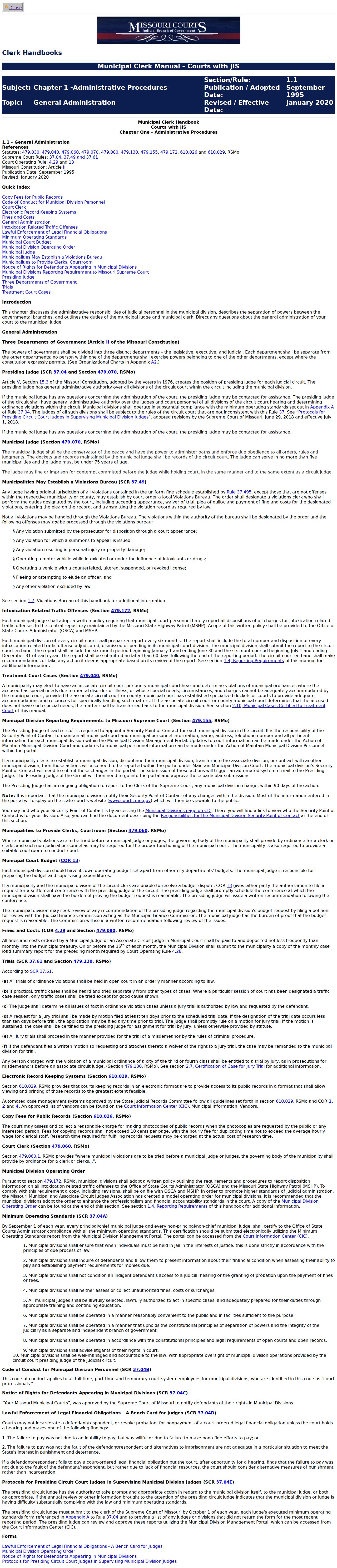
Keep payment questions separate from record questions. The municipal clerk guidance on public court and payment plans spells out that distinction. The official page shows how courts handle both.
Some situations demand the local channel. A tight deadline, a warrant concern, or a need for an authenticated result all point back to the clerk. The St. Clair County Circuit Clerk remains the final confirmation route for any criminal docket.
Sealed Dockets and Public Access
A St. Clair County criminal docket is not fully public. Missouri rules draw a line between ordinary case information and confidential documents. Juvenile proceedings and social records stay confidential in most cases. Sealed records, restricted filings, and records protected by court order may vanish from a name search. They may also lack a public document link. Redactions add another layer. They shield personal identifiers inside filings that are otherwise public.
Missouri access rules:
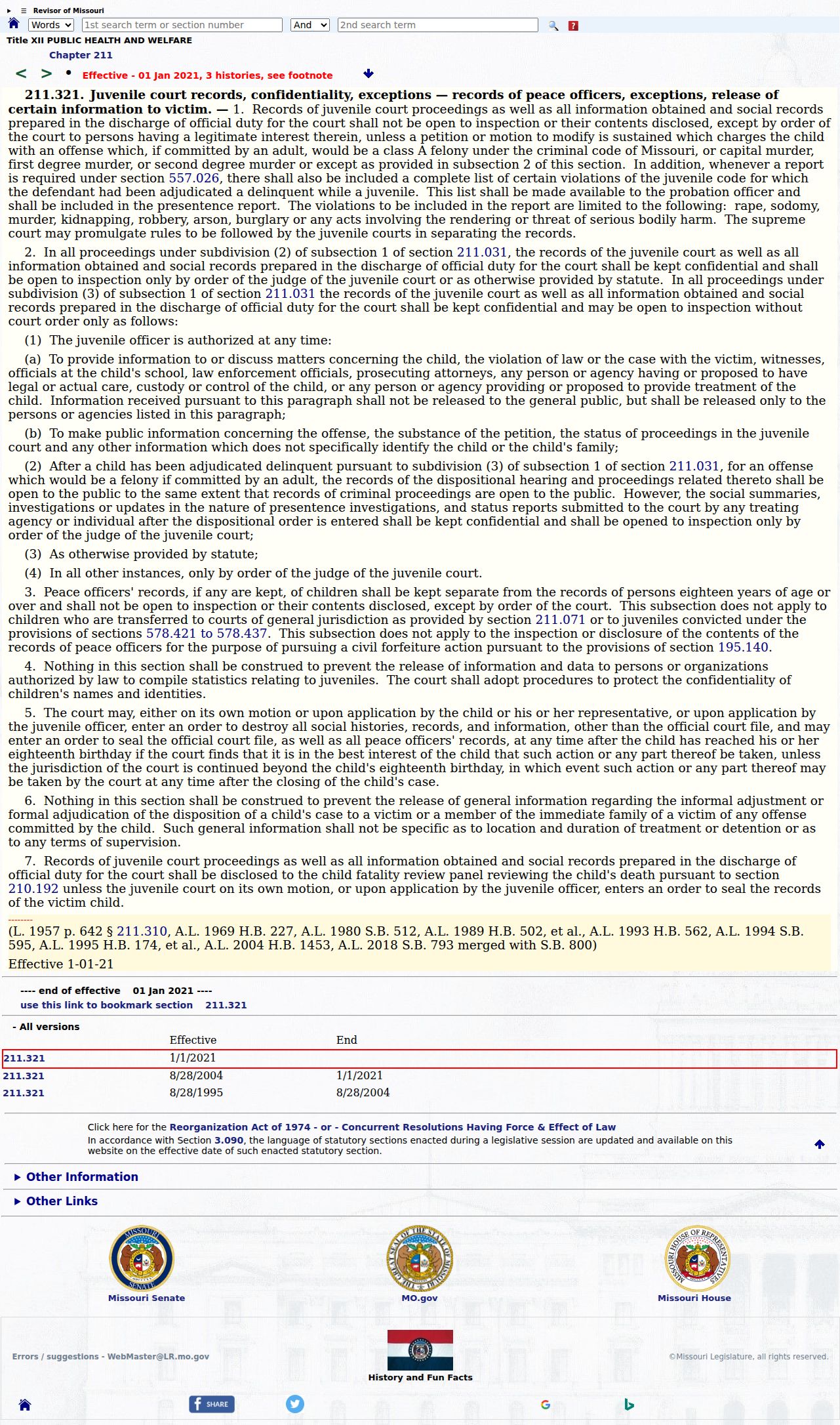
Section 211.321 generally protects juvenile proceedings and social records, subject to statutory exceptions.
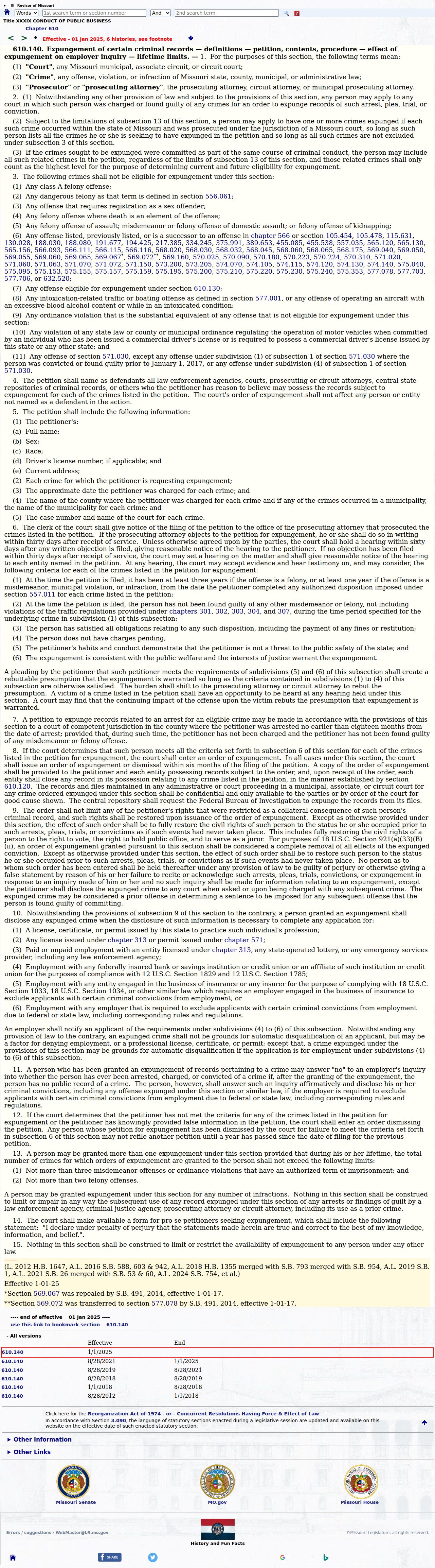
Section 610.140 makes eligible expungement petitions and related court records confidential except as allowed by law or court order.
Section 509.520 requires redaction of specified identifiers in court filings and uses confidential filing sheets where applicable.
The official juvenile-record statute describes the restriction.
No result does not mean no case. A missing entry may trace to a protected party, a sealed or expunged matter, confidential material, or a record that requires a permitted court channel.
St. Clair Criminal Docket Limits
Expungement works through statute, not through a quiet deletion from a docket search. Section 610.140 sends the petition to a specific court. That is where the person was charged or found guilty. The court must act within six months. The law also sets exclusions and lifetime limits. It requires a pro se form. The petition and court records stay confidential except for parties or a court order. Section 488.650 sets a $250 expungement surcharge. Ask the St. Clair County Circuit Clerk to verify any other fees.
The official expungement statute lays out the full petition, confidentiality, and timing framework on the revisor's page.
A St. Clair County criminal docket is still the best window on public court activity. But when the result must be authoritative, get a certified court record or confirm directly with the clerk.